
Andean Araucanía Workshop Guide
ABOUT OUR WORKSHOPS
Thank you for choosing to join us in Chile! You’re about to embark on a photographic journey through an extraordinary landscape—a place that is not only visually compelling, but where life flourishes in extreme environments and the effects of geologic processes and weather are vividly evident. Witnessing these locations is both humbling and inspiring.
We believe the creative path is a never-ending, deeply rewarding, and self-fulfilling journey. Creating new work requires persistence, patience, and active participation from the photographer, often standing in contrast to the speed and productivity-driven rhythms of contemporary grind culture.
Our goal is to foster an elevated awareness of your surroundings, encourage exploration and experimentation, and support a deeper emotional connection to the aspects of nature that resonate most strongly with you. Through shared thoughts and concepts, we aim to plant seeds of creativity that open new ways of interpreting the environment through your lens.
A central focus of our approach is developing the ability to adapt to any conditions encountered in the field, while equipping you with creative and reflective tools to meet these challenges through your work. We also guide you toward practical methods for letting go of attachment and expectation, creating space to invite possibility—an approach we believe leads to more expressive and personally meaningful images.
While we are committed to helping you come away with great photographs, the true value of the workshop lies in unlocking your inner voice and nurturing your creative, authentic self. We emphasize the development of your personal vision and the creation of experiences that you will carry with you long after the workshop ends.
This document provides important information to help make that possible. If you have not done so already, please fill out the workshop registration page before your departure. This helps us understand your experience level, your goals and expectations, and vital emergency contact information.
As always, please don’t hesitate to reach out with any questions—we’re here to help. Thank you for choosing to join us and for supporting our dreams!
Paulo and Anna
Paulo: +56 996 868 538
Anna: +1 (236)-982-9590
CONTENTS
You can use the menu below to navigate quickly to the various sections of information.
- About the Andean Araucanía Region
- How to Get There
- Our Accommodation and Meals
- What to Expect
- Itinerary Guide
- Physical Capabilities and Safety
- Communication
- Leave No Trace Principles
- Weather and Clothing
- Packing Lists
- Frequently Asked Questions
ABOUT THE ANDEAN ARAUCANÍA REGION
The Araucania region covers an area of around 32,000 km2 with a population of 1 million. To the south, it overlaps with the Chilean Lake District. The Pacific Ocean lies to the west of Araucanía and the Andes mountain range - and Neuquen Province of Argentina runs along its eastern border.
The area has a rich human history with the first settlers arriving thousands of years ago. The Mapuche people are estimated to have lived here since 600 BCE and their culture thrived, becoming the prominent indigenous community of Araucanía which became their heartland. They successfully resisted the Inca Empire, establishing the Biobío River to the north of the area as a frontier, and continued their resistance against the Spanish for 300 years after their arrival in the 1500s. Later came the occupation of Araucanía marked by a sequence of uprisings and campaigns between the Mapuche and the Chileans until Araucanía was officially annexed by Chile in 1882.
Mapuche, meaning "people of the land" have a deep and sacred connection to the landscape. Like many indigenous cultures around the world they view the landscape as a profound interconnectedness; a balance of spiritual and physical realms. Mapuche spirits are central to their worldview, including Pillan - a volcano spirit and Antü, the sun god. The Machi (a shaman or healer) maintain harmony between humans, spirits and the cosmos through ritual. Insights into the Mapuche people's deep connection to the land, their history, art and ongoing stewardship will help us approach our time here with greater understanding and respect.
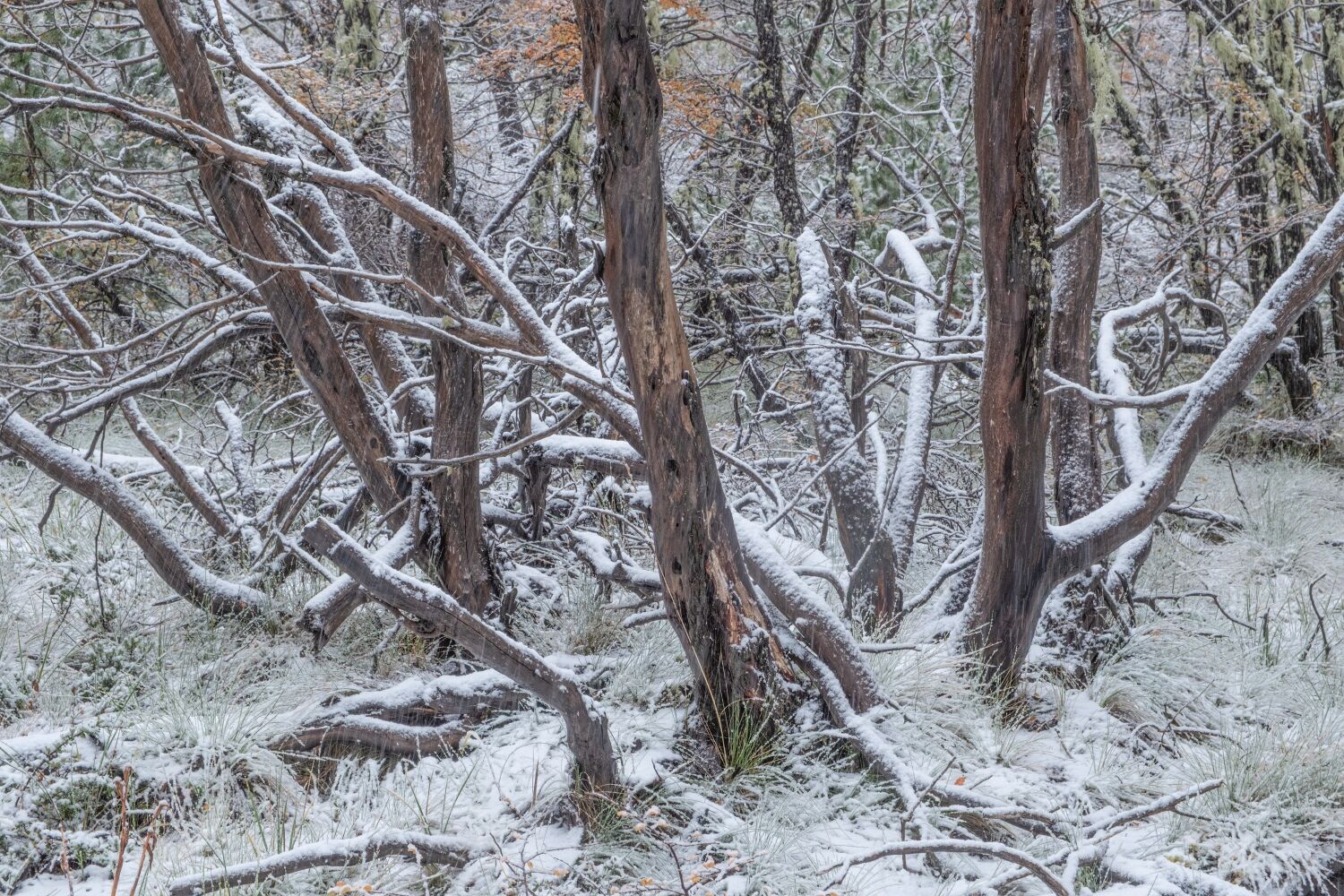
Temuco is the capital of the region and the main city, accounting for around 30% of the region's population. The area boasts 5 national parks and 6 national reserves and a number of additional wilderness designated areas. Of these, Conguilio National Park is the largest at around 60,000 hectares and is home to two large volcanoes - Llaima and Sierra Nevada. Llaima, the larger of the two stands at over 10,000ft and towers over the surrounding forests, dominating the landscape. Llaima's activity has been documented since the 17th century and is one of Chile's most active volcanoes with the last major eruption recorded in 1994.
Created in 1931, the Malalcahuello National Reserve, is within a stone's throw of our lodging. It is administer with the adjoining Nalcas National Reserve. Natural features of this area include Lonquimay and Tolhuaca volcanoes, Arenal, La Plancha and Las Raices hills.
On the other hand, stratovolcanoes of these areas, such as the Lonquimay, Tolhuaca and Llaima volcanoes, deposited massive layers of basaltic flows (lava rivers). These flows later solidified into large fields of scoria ("escoriales"), like those seen in the Malalcahuello-Lonquimay areas. The melting of snow and glaciers also created lahars (volcanic mudflows), which allowed nutrients and sediments from these flows to distribute widely across basins. This, in turn, created the soil conditions necessary for life to rapidly colonize the environments once dominated by both volcanic activity and glaciers.
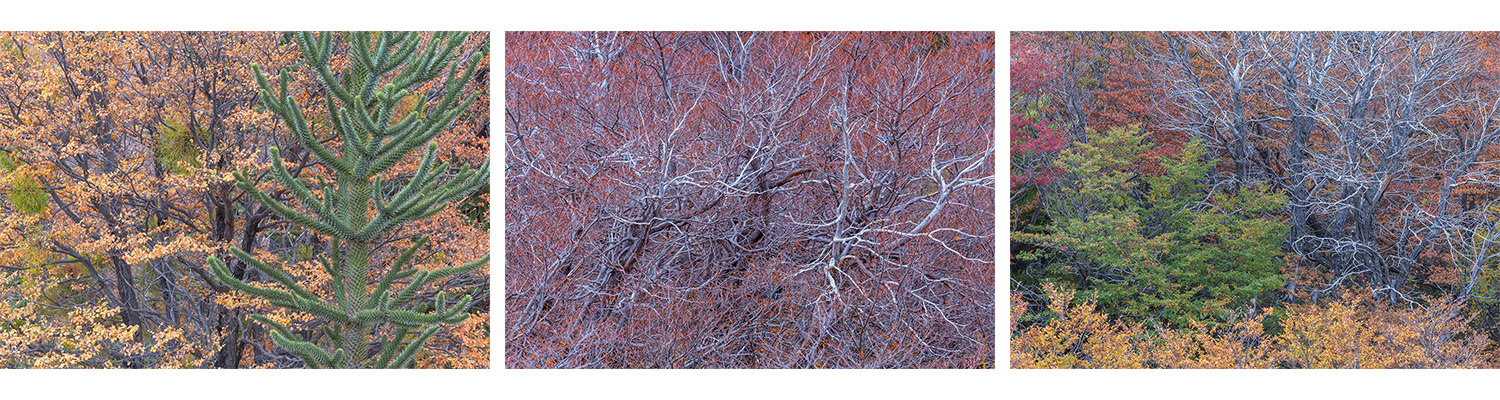
Virgin forests, featuring coigüe, raulí, oak and Ñirre trees, as well as lingue, tihue and cordilleran cypress, criss-cross the region in all directions. The majestic conifer Araucaria araucana, or monkey-puzzle tree (known locally as pehuén) is endemic to the Andes and coastal ranges of southern Chile and Argentina. The tree, with its distinctive umbrella-shaped crown, holds deep cultural significance for indigenous peoples as a provider and symbol, and its fruit, the piñón (a type of massive pine nut) - is still a staple food for Pehuenche people and local residents alike.
Home to a diverse range of critters, these forests are a haven for an extensive variety of mammals, birds and reptiles. Here, mountain lion (cougars / pumas), foxes and pudú, one of the smallest deers in the world thrive alongside a wide variety of smaller mammals. The Malalcahuello National Reserve has become one of the few remaining refuges for the protection of endemic species that are seriously threatened and at risk of extinction. Reliant on the same rugged environment that the Araucaría trees define and deeply embedded into local culture, the enormous Andean condor soars above the ancient forests, a majestic scavenger showcasing a beautiful natural partnership in the Andes. Woodpeckers, magellanic horned owls and a great diversity of smaller birds also nest in the forests
HOW TO GET THERE
The workshop begins and ends at Temuco Airport, also know as La Araucanía International Airport (ZCO). Depending on where you are arriving from, you will likely need to transfer in Santiago, Chile - a 1h 25m flight away.
We strongly advise arriving in Temuco the day before the workshop starts in case of any travel delays. There is a wide range of options for overnight stays in Temuco as well as a limited number of accommodation options in nearby Freire. Buses, taxis and airport transfers between the airport and Temuco are readily available and inexpensive.
For the duration of the workshop, we will be based in Malalcaheullo some 110 kilometers from Temuco and 70 kilometers from the Pino Hachado International crossing on the border with Argentina.
The transfer from the airport to Malalcahuello - and back - is included. Once we have the flight details of all the participants we will arrange a rendezvous time and location. This information will be provided nearer the time.
OUR ACCOMMODATION AND MEALS
Our base during the workshop will be Suiza Andina, a Swiss-inspired lodge and restaurant in Malalcahuello. The lodge is considered an icon of the area. Suizandina Lodge was founded in 1998 by two Swiss travellers. who fell in love with Malalcahuello during a bicycle tour from Alaska to Tierra Del Fuego. They bought the land and rebuilt the old farmhouse turning it into a lodge and restaurant, which remains a family-run business.
In addition to the main lodge, there are two guest houses on site. All rooms have private bathrooms and some rooms have access to a shared cooking area as well. Prices for the workshop are based on single occupancy but if you are travelling with another participant and are keen to share a room, please get in touch as this is easily arranged.

The workshop is fully catered with the exception of alcoholic drinks. The restaurant is located within the main lodge and will be providing us with breakfast, lunch and dinner each day as well as providing coffee / tea and snacks. On those days where we are in the field for the full day, they will put together a packed lunch for us. They are able to cater to all dietary requirements so please ensure you let us know of any relevant information in the registration page.
WHAT TO EXPECT
Our combined methodological approaches are shaped by a wide range of subjects, weather conditions, and lighting qualities. Over the years, we have each worked extensively under both 'ideal' and challenging circumstances across our respective geographies. One of the most valuable lessons we have learned is that as environmental conditions fluctuate, the photographer’s ability to adapt becomes increasingly critical to creative and professional growth. Through our experience and complementary approaches, you can expect to develop greater confidence in navigating diverse field conditions and learn to employ these variables as active elements of creative practice.
You will be learning from two photographers whose relationships to this particular landscape are markedly different. As a local photographer, guide, and naturalist, Paulo has been photographing the Araucanía Region for over sixteen years. His work spans from expansive landscapes to more intimate and subjective scenes, reflecting a long-term engagement with the region. This sustained practice has fostered a deep understanding of weather patterns, subject matter, and the physical and biological elements that shape his body of work.
In contrast, Anna is new to the region, offering insight into how an experienced photographer responds to unfamiliar environments, reads a landscape for the first time, and embraces uncertainty and creative possibility. Together, these complementary approaches will deepen your own landscape literacy and expand the ways you observe, interpret, and work within unfamiliar or evolving environments.
We believe that reviewing example photos and discussing our in-field approach can help guide your vision toward the photographic possibilities this uniquely diverse landscape offers. During the workshop, our goal is to help you engage with a landscape using different mental models and practical methodologies, drawing on the rich variety of ecosystems, subject matter, weather, and light conditions that define the Andean Araucanía. These approaches are designed to give you the confidence to work in diverse conditions and to adapt your skills to other locations. As instructors, we aim to expand and nurture your creative thinking by equipping you with tools and strategies that have proven effective in our own work over many years.
While we will not finalize an exact photo location schedule at this time—since we will remain flexible based on prevailing weather conditions—this sample itinerary provides a good idea of what to expect. Time-specific details will be sent closer to the workshop date. We highly recommend arriving at least one day early to avoid any impact from potential travel delays. For information on travel, please see How to Get There.
Sunrise at this time of year is around 7.30 am. A typical day usually begins with a departure before dawn for a sunrise shoot. Departure times vary depending on the location, with our earliest departure around 5.45 am for our farthest sunrise spots.
Midday activities depend on weather and the schedule. Some days, we may photograph from dawn until dusk and take advantage of dappled light in a canyon or at an overlook; other days may include a classroom session or time for personal exploration. We strive to balance the day to keep you refreshed and engaged. Sunset at this time of year is at around 6 pm.
The workshop concludes at around midday after the final classroom session focused on creative thinking and reflection.
ITINERARY GUIDE
We are not able to give you an exact photography location schedule at this time since we will need to be somewhat flexible based on prevailing weather conditions and autumnal colour. This way we can get you to the ideal places for you to experience the very best photographic opportunities that the area has to offer.
However, the following itinerary will give you a good idea of what to expect each day will bring. Decisions about morning and evening meeting times will be decided the day before, once we know exactly what the weather holds in store for us.
DAY 1
On the first day, we will meet at La Araucanía International Airport (Temuco Airport - ZCO) located in Freire, just south of the city of Temuco. An exact time will be arranged once we have the flight details of all the workshop participants. You will transported to our hotel, Suiza Andina, located near Malalcahuello in the Andean Araucanía region - a 2.5 hour drive away. We gather in the hotel at 3pm for an orientation followed, in the evening, by a welcome dinner.DAY 2
Today, after an early breakfast we will be exploring the area around nearby Corralco which sits in the Malalcahuello National Reserve. It is a 31,000-hectare state-protected wilderness area dominated by the Lonqimay and Tolhuaca volcanoes. Here, the volcanic and glacial activity of the Lonquimay volcano meets the humid forests of araucarias, lengas, ñirres and coihues. Sandy volcanic soil covers much of the area, with large forested areas dominated by Araucaria trees. We will return to the hotel for lunch and some down time before returning to Corralco for the afternoon. Dinner will be provided at the hotel.DAY 3
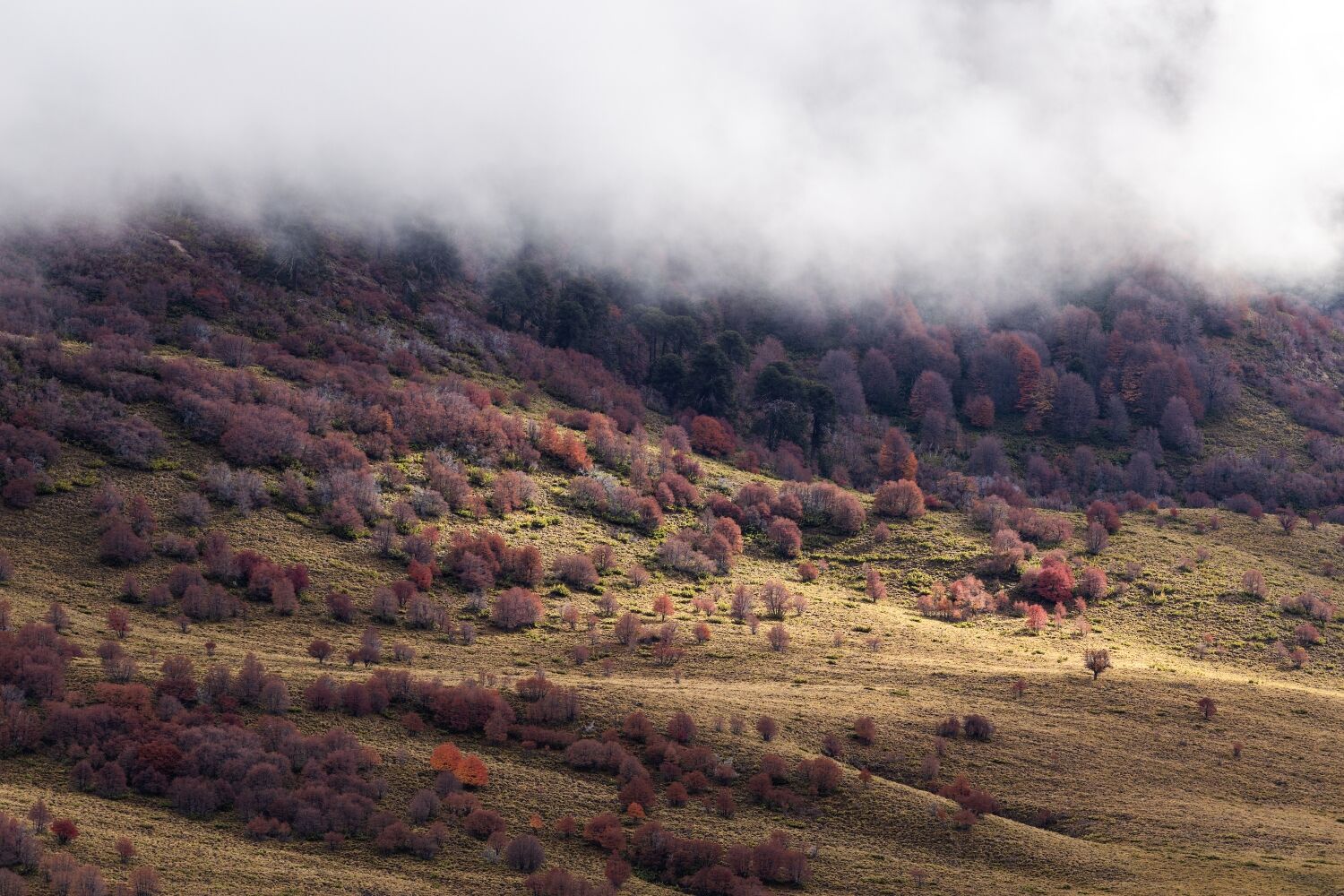
Today, we will be exploring Conguilio National Park for the full day which is approximately one hour from the hotel. A UNESCO biosphere reserve and part of the wider Kütralkura Geopark, its name is derived from the Mapuche word for "water with Araucaria seeds". Against the backdrop of the Llaima Volcano - one of Chile's largest and most active volcanoes - the area is covered in extensive forest comprising mainly Araucaria and Nothofagus (southern beech) tree species. We will mostly be exploring the area around lake Captrén. A packed lunch will be provided and we will return to the hotel for dinner.DAY 4
A more relaxing day. After a slightly later breakfast, we will visit the local thermal pools this morning to rest and rejuvenate ourselves. We will have lunch at the hotel before setting out for Corralco for the afternoon.DAY 5
We will have an early breakfast before headed out to an area known as Cuesta Las Raices, a mountain pass connecting Malalcahuello and Lonquimay. This area is well known for its stunning views of Araucaria forests, Pehuenche communities (selling pine nuts) and beautiful autumn colours. After a packed lunch, we will move on to Pehuenco an hour or so away where we will stay until sunset exploring the volcanic formations. On our return, we will be provided with a traditional Chilean asado (slow-cooked barbecue).DAY 6
After breakfast, we will gather for an informal classroom session. Here we can reflect on our time together and consider what we have discovered during our workshop. Bring any questions you might have for an interactive discussion! We will leave the hotel at around midday en route back to the airport. A lunch box will be provided for the journey.
PHYSICAL CAPABILITIES AND SAFETY
As we will be in the great outdoors, there are many potential natural obstacles and challenges that may present themselves. Knowing how to stay safe especially in wilderness areas is important. Your safety is of utmost importance to us so we are providing this information to help you prepare.
We advise that you be comfortable hiking up to 3 miles over uneven terrain. Since hiking ability is subjective, it is hard to tell you that a certain hike is ‘easy’ or ‘difficult’. Many of the hikes on this workshop would classify as 'easy' or 'moderate' to the average hiker, but you should trust your own instincts and abilities when hiking. Some of the obstacles you may encounter when hiking both on and off trail include: uneven terrain, steep drop-offs, crumbling cliff edges, mud, slippery surfaces and fast-moving glacial water.
The typical threshold for seeing altitude sickness is 8000 feet. While some of the locations we visit are at higher altitude, we will not be venturing above 8000 feet. However, some individuals will experience altitude sickness at elevations between 5000 and 7000 feet. Physical activity can exacerbate symptoms especially if not acclimatised. If you have experienced altitude sickness before or you experience headaches, nausea, or fatigue while in the field, you must make one of the instructors aware.
One of the easiest things you can do to prepare, is to carry the Ten Essentials on all of your outings into nature. Sometimes this may seem like overkill but a simple hike can quickly and unexpectedly turn into a survival scenario. Some of the most important items in the Ten Essentials will be mentioned in the packing lists as well.
- Navigation: We will be staying on well marked trails but you should consider carrying a map / compass / GPS device / or satellite messenger
- Headlamp: Make sure it is fully charged / bring extra batteries
- Sun protection: Sunglasses, sun-protective clothes and sunscreen
- First aid: The instructors will be carrying a first aid kit but if you have your own, please consider bringing it.
- Knife: Or a multi-tool and cordage.
- Fire: matches or lighter.
- Shelter: carried at all times (can be a light emergency bivy).
- Extra food: Beyond the minimum expectation. Meal bars, dried fruit, nuts and seeds are recommended.
- Extra water: Beyond the minimum expectation.
- Extra clothes: Beyond the minimum expectation.
Wildlife is plentiful in the Andes. Although mountain lions (cougars / pumas) live in the area, their density is relatively low and it is unlikely we will cross paths with one even during the most active times of Dawna nd dusk. If you do see one, do not run, maintain eye contact and back away slowly. Make yourself look big and speak in a loud, firm voice. If attacked, the advice is always to be aggressive and fight back - do not attempt to play dead. Observe all wildlife from a distance.
Ticks are present in the Andean Araucanía. Tick bites can cause serious illness. Check your clothing and body for ticks after time on the trail. Consider using tick repellant. The risk of mosquito-borne diseases is low and numbers of mosquitoes tail off in the autumn months.
COMMUNICATION
We will be communicating during the workshop via WhatsApp. This is a free messaging service that works on both iOS and Android and it really helps to streamline our communication by keeping it all in one place. Please download the app as soon as possible and we will create a group where questions can be asked prior to the workshop and where we will send meetup information. Once we have your phone number, we will add you to the group.
Most of the areas we will be visiting during field excursions are remote locations and cellular service is limited. Wi-fi is available at the lodging.
LEAVE NO TRACE PRINCIPLES
We highly encourage you to familiarize yourself with these principles by visiting the website: The Leave No Trace Seven Principles. While the Leave No Trace Principles have been the standard for years, we encourage you to take it one step further and Leave It Better. We encourage you to do your part in helping maintain the beauty of our natural areas by packing-out any litter or manmade materials you come across.
Avoid stepping off trail. Not only is this for your safety but it helps preserve the beauty of the area by not wearing down or killing the flora which struggle to survive in the very short summer season.

As proud members of Nature First Photography, we are committed to responsible nature photography practices. We abide by and promote the seven principles of this movement and encourage you to join us in preserving the natural world we capture through our lenses.
- Prioritise the well-being of nature over photography.
- Educate yourself about the places you photograph.
- Reflect on the possible impact of your actions.
- Use discretion if sharing locations.
- Know and follow rules and regulations.
- Always follow Leave No Trace principles and strive to leave places better than you found them.
- Actively promote and educate others about these principles.
WEATHER AND CLOTHING
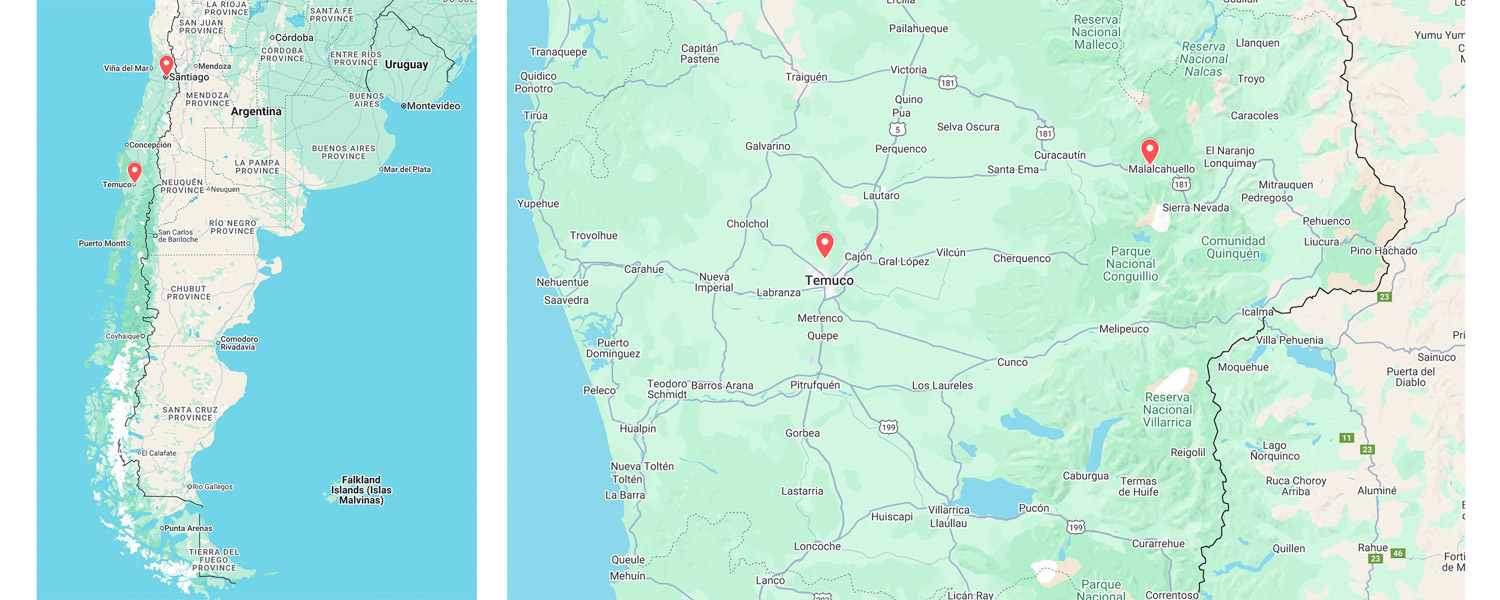
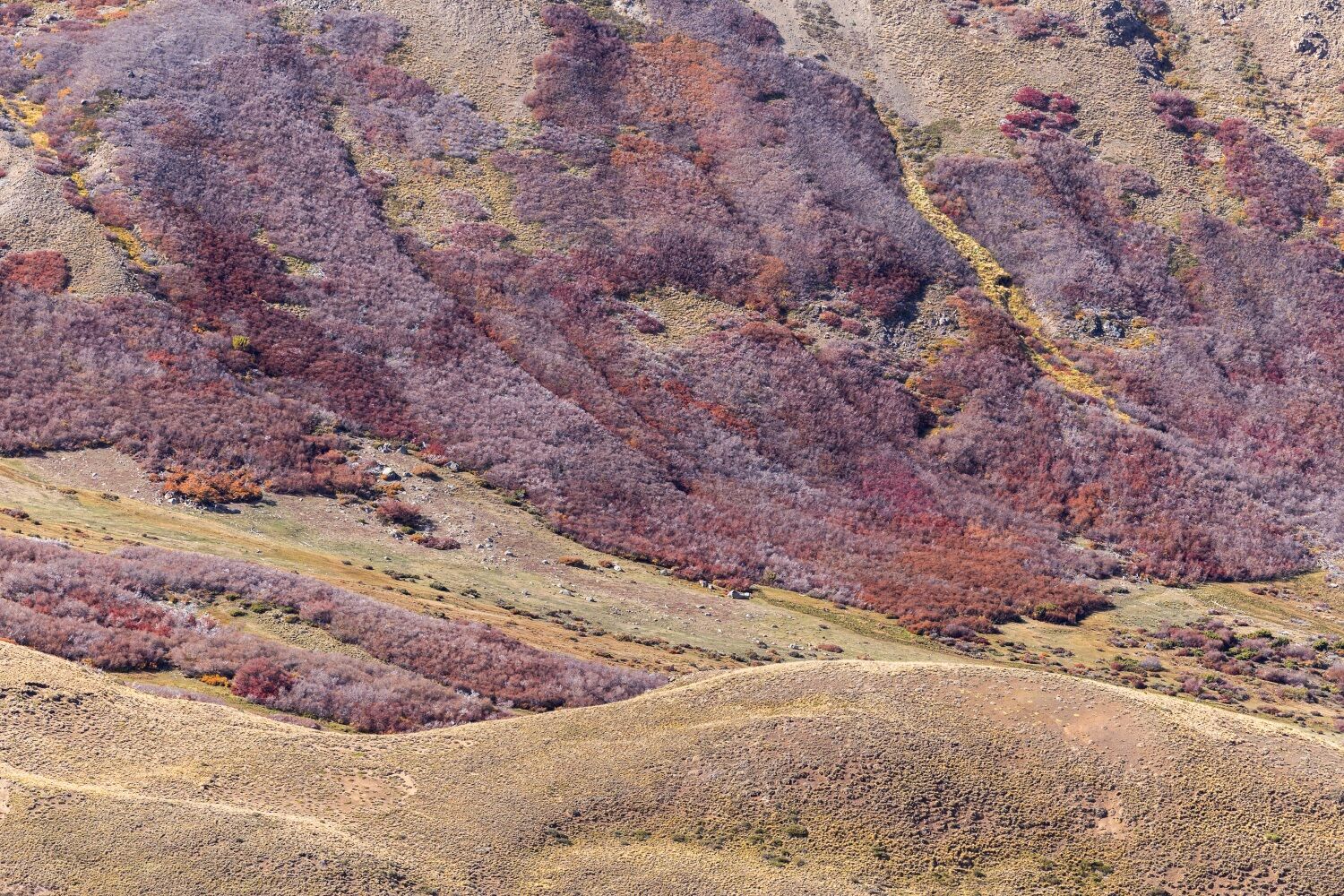
At this time of year, the Araucanía Region is in late autumn, meaning cool, crisp weather with chilly nights, with highs often around (2-11°C) (mid 30s-50°F) and lows near freezing (0-4°C / 30s°F). There is a chance of rain showers and, at higher elevations, early season snow showers are possible meaning we have the chance to photograph the collision of seasons.
As is the case in all mountainous regions, the weather can change dramatically within any given day, and elevation makes a big difference to the temperatures and wind speeds. The climate in this part of the Araucanía region is strongly influenced by Pacific weather systems that are characterised by a transition from a temperate Mediterranean climate at lower elevations to a cold, wet oceanic and alpine climate in the Andes. This region also features highly active volcanoes that influence local weather patterns. Winter can bring heavy snowfall and, while we don't expect to experience this in May, the transition from autumn to winter can be unpredictable.
Sunscreen and sunglasses are important. The average UV index in the alpine areas in May indicates that sunscreen, hats and sunglasses are recommended, especially during peak sun hours. In addition, if there is snow on the ground at any of the locations we visit, UV radiation can double in intensity due to the snow reflection.
Given the changeability of weather, layering is essential when out in the field.
PACKING LISTS
These are not exhaustive lists but give you a good picture of what you should be packing for the trip. Please reach out if you have any specific questions.
CLOTHING:
- Hiking Pants - Consider zip-off pants allowing you to have both shorts and pants, and quickly transition from one to the other. Pants are recommended on trails and grassy areas due to presence of ticks.
- Fleece - of varying thicknesses
- Insulated Jacket - You should consider both down and synthetic insulated layers
- Waterproof Jacket
- Rain Pants
- Hiking Shoes with good soles.
- Gaitors
- Long Sleeve T-shirts - ideally non-cotton
- Short Sleeve T-shirts - ideally non-cotton
- Warm Toque
- Sun Hat
- Gloves
- Sunglasses
- Hiking Poles
- Merino Wool Socks
- Swimwear - For the hot springs / thermal baths
- Flip Flops / Sandals
- Bandana/Buff - for covering your neck from the sun and the wind
PHOTOGRAPHY EQUIPMENT
- Your Camera - You can choose to use any camera you like, but a digital camera (SLR or mirrorless) with full manual control and interchangeable lenses is highly recommended and gives you the best experience. It is advised that you fully understand how to operate your camera.
- Lenses - There are opportunities to use any focal length possible, so bring all that you can, wide to long as there are possibilities for shots ranging from 14mm all the way to 600mm. We recommend renting a long telephoto if you do not own one.
- Tripod - We will often be shooting in low light, requiring longer exposure times.
- Filters - Generally all you will need to use is a polarizer and neutral density filters. Although, it is possible to get great shots without either.
- Batteries and Chargers
- Plenty of Memory Cards
- Remote Trigger
- Lens Cleaning Supplies - Lens cloths, rocket blowers, brushes
- Computer/Portable Hard Drive (optional) - for downloading your files off of your memory cards.
- Camera Bag - It's advised to bring one large enough to hold your camera gear (including tripod), clothing layers, water, snacks, and your Ten Essentials. You need to ensure it is comfortable to carry on your back while hiking.
OTHER GEAR TO CONSIDER
- Headlamp (highly recommended) or flashlight - We may be out before the sun comes up or after it goes down.
- Medications
- Sunscreen
- Lip Balm
- Foam Seating Pad - For comfort when kneeling or sitting outside. There are many options out there but we recommend Z Seats.
- Trash Bags - Not only for picking up and packing out trash, but also to lay on the ground in muddy or wet conditions. Some areas we take you to may be wet or muddy.
- Smart Phone and Charger
- Reusable Water Bottles
- Tick repellant
- Water - to is important to stay hydrated at all time. Always leave for a hike with full bottles on your person after having refreshed yourself and topped the bottles up.
FREQUENTLY ASKED QUESTIONS
Which lenses should I bring? There is opportunity for every lens and the hikes aren't very long so bring all that you can afford to bring and are willing to carry! With the style of Paulo and Anna’s photography, it pays to bring a telephoto as long as 400mm-600mm.
What happens during inclement weather? We photograph! Sometimes the weather can create an invigorating and memorable experience, so if it's anything but downright miserable or dangerous, then we embrace the conditions and explore how we can use the conditions in creative ways to help tell the story of that moment. If the weather is so bad that it makes it impossible to photograph, then we will gather for classroom discussion, instruction, or critique. This would be optional and you can always choose to spend the time resting and relaxing if you prefer.
Do I need to bring my computer? You only need to bring your computer if you want to use it during down time, to download and backup your files off of your memory cards. If you don't have a need or interest for those things then we suggest leaving your computer behind so that you have one less expensive item to worry about while traveling.
We cannot reiterate enough to reach out if you have any questions or needs. We’re here to make this trip easy, fulfilling, fun, and memorable. If there’s anything we can do to help make that happen please let us know.
We look forward to the adventure and will reach out with more specific details closer to the start of the workshop!
Paulo and Anna